Emergency Food Aid for Gaza – help make it happen
The Israeli vegetable growers’ association has a surplus of 5000 tons of potatoes that will be destroyed on Sunday in order to keep the prices up in Israel. So Gershon Baskin, a long time peace & coexistence activist, thought instead of piling a landfill these potatoes could feed Gaza’s children.
For Gershon, the route from thought to action is very short. And yours could be even shorter – just donate to his campaign here:
https://www.indiegogo.com/projects/emergency-food-aid-for-gaza
Hey Google – where are my flappin’ videos?
is this google’s idea of a graceful exit?
Google recently sent the users of video.google.com service a notice saying that it was discontinuing this service, and urging them to migrate their videos to YouTube.
forget one-click migration to YouTube, my videos have disappeared altogether, and there’s no one to talk to.
I had a couple of dozen of videos on google video. when I logged in to download and move them, they simply weren’t there. oh well, I thought, momentary glitch. but no – they haven’t re-appeared. support? google have closed down all the google video forums, so you can’t post any issue. Strangly enough, even the service termination notice doesn’t appear on video.google.com or any of google’s official blogs. For lack of alternatives, I posted an issue on the YouTube support forum. I haven’t received any response.
Ok, google has the right to shut down a free service it has been providing for years. A bit of a longer notice period would be nice, some migration tools would ease the pain. But that’s up to them. However, this goes way beyond reasonable behaviour. Can I please have my videos back?
if you’re walking the Limestone way this weekend, please look for my son’s Atomic Floyd headphones
We’ve just been on a wonderful walk along the Limestone way, from Matlock to Castleton (we slept at the lovliest B&B ever – Niki & Steve’s Arborlow farm).
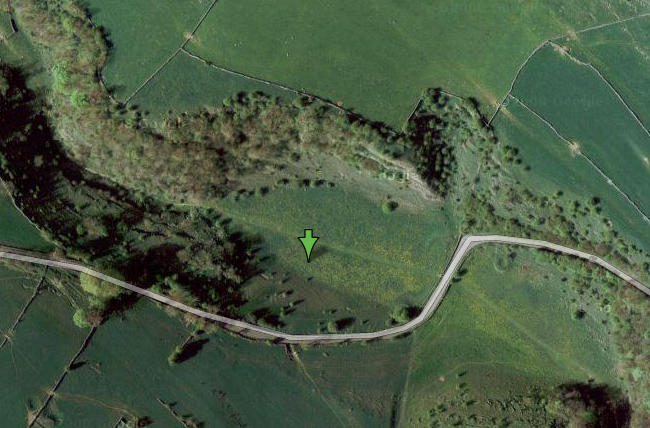
On the day before last, we stopped for lunch in Monk’s Dale, right to the north of the Tideswell – Wormhill road. The next morning my son realized he dropped his precious Atomic Floyd headphones there.
If you happen to be passing along that road – please have a look. We were sitting in the meadow, about 200m north of the road and 40m west of the path, next to a moss covered stone.

Israel’s Ministry of Education adopts Abraham Fund’s ‘Language as Cultural Bridge’ Programme
From http://groups.google.com/group/tafi-uk/browse_thread/thread/fd26291b8695cc0d:
From: Laurence Kaye <laurence.kaye@abrahamfund.org.uk>
Date: 16 September 2010 19:36
Subject: [tafi-uk] Major coup for TAFI – Israel’s Ministry of Justice adopts TAF’s ‘Language as Cultural Bridge’ Programme
To: tafi <tafi-uk@googlegroups.com>
Cc: Simon Arenson <simon.arenson@abrahamfund.org.uk>You may have seen the BBC’s report – see link here – about the Israeli Ministry of Education’s recent decision to make Arabic-language classes compulsory in state schools. But what the story doesn’t tell you is that Government is doing this by adopting TAFI’s flagship ‘Language as Cultural Bridge’ Initiative as government policy. What this means ‘on the ground’ is that in Israel’s Northern District the programme will expanded from 96 schools to 250 in the current school year. What’s even better is that the Government is now proudly promoting this its own project.TAFI’s goal is to bring about a shared society in Israel between its Arab and Jewish citizens by working with the Government to bring about the policy changes needed to turn this dream into reality. TAFI’s Initiatives are the means by which TAFI works to bring about these policy changes. The Government’s adoption of TAFI’s ‘Language as a Cultural Bridge’ programme is a perfect example of how this strategy can work.Our new Executive Director Simon Arenson will be writing to you soon with an update about our plans but, in the meanwhile, I wanted to share this news with you. It shows that your continuing investment in UK-TAFI is an investment that will pay real dividends in bringing about the kind of Israeli society of which we can all be proud.If you want any further information about our work, please make contact with Simon, whose email address is above.Kind regardsLaurie KayeChair, UK Friends of the Abraham Fund Initiatives
For more news from the UK Friends of the Abraham Fund Initiatives, you can subscribe to the mailing list here: http://groups.google.com/group/tafi-uk
Rubbish aid: send your junk to Africa

“America Imprisoned” – why you should care about Dr. Alexia Nibona’s visa
Agli – the The African Great Lakes Initiative of the Friends Peace Teams is an incredible organisation working to promote grassroots peace, healing and reconciliation initiatives in one of the most pain-stricken parts of the world. I have been in touch with them regarding the use of mobile phones and other technologies to support citizen-driven early warning and response to violence around the upcoming elections in Burundi. I have met some of their inspiring activists in London, and others on-line. Today I received this report:
AGLI – Report from Kenya – March 14, 2010America Imprisoned
Dear All,
I am not talking about the two million Americans currently in prison in the United States. I am talking about all three hundred million plus Americans. If someone cannot visit America, while the excuse is that the person may not be good for America, the real effect is that Americans are prisoners in their own country. The wall the US Government is building on America’s border with Mexico is part of this prison.
Dr. Alexia Nibona, doctor and director of the Friends Women’s Association’s Kamenge Clinic in Bujumbura, Burundi, was denied a visa by the US consular officer in Bujumbura. The consular officer wrote the following letter.
* * * * * * * * * * * * * * * * * * * * *
Dear Mrs. Nibona,
Thank you for your inquiry regarding the denial of your non-immigrant visa application. We appreciate the purpose of your planned travel to the U.S. on behalf of the Friends Women’s Association, however, this is not the only evidence considered in determining eligibility for a non-immigrant visa.
Your application was denied under Section 214(b) of the Immigration and Nationality Act (INA) which states that applicants for nonimmigrant visas shall be presumed to be intending immigrants, unless they can establish to the satisfaction of the consular officer that they fulfill the various provisions of the nonimmigrant status which they seek. Such requirements for visitors include but are not limited to maintaining a permanent residence abroad. A refusal based on this section of law generally means that the visa applicant was unable to demonstrate strong enough family, social and economic ties to their country of residence that would compel them to depart the United States after a temporary visit. The burden of proof is on the applicant to prove that they overcome the immigrant presumption. Unfortunately, your application did not meet the qualification requirements for the particular type of visa for which you applied.
In many such cases, relatives and contacts in the United States or elsewhere wish to make guarantees that the persons applying for the visas will depart the U.S. and return to the residence abroad at the conclusion of their authorized stay. However, it is the applicant alone who must establish eligibility for a visa. Consular officers may not issue visas based solely on the assurances of third parties.
Please be assured that every possible consideration consistent with U.S. immigration law was given to the review of your visa application.
Thank you.
The Consular Section
* * * * * * * * * * * * * * * * * * * * *
We had an extensive tour arranged for her between March 29 and May 2. This rejection was a tremendous disappointment to Alexia. As I wrote in my invitation letter, since 2001 AGLI has brought 21 African speakers on tours in the United States and all have returned as scheduled. Although Alexia presented documentation of employment for herself and her husband, title deeds to house, property, and car, marriage certificate, and bank statements, plus the intervention of a US Senator’s immigration officer, we still failed. Americans don’t realize that their country is becoming as isolated as it was when transport was by sailing ships. How can Americans know what is happening in other parts of the world, if the majority of the world is not allowed in because they are judged guilty until they can prove they are innocent in front of very partial judge?
In order not to disappoint those who worked so hard on arrangements for the tour, Alexandra Douglas, AGLI’s extended service volunteer at the Kamenge Clinic, will substitute for her. She will bring a short video presentation by Alexia so that she can have at least some presence in the US. Her tour will include Iowa, California, Missouri, Florida, Tennessee, and DC. Please look at AGLI webpage, www.aglifpt.org for details of her presentations.
Peace,
Dave
New webpage: www.aglifpt.org
New email: dave@aglifpt.orgDavid Zarembka, Coordinator
African Great Lakes Initiative of the Friends Peace Teams
P. O. Box 189, Kipkarren River 50241 Kenya
Phone in Kenya: 254 (0)726 590 783 in US: 240/543-1172
Office in US:1001 Park Avenue, St Louis, MO 63104 USA 314/647-1287—
Distributed by:
Dawn L Rubbert, Program Manager
St. Louis, MO, USA
dawn@aglifpt.org 314-647-1287
You would think that in Obamistan an educated African woman invited for a speaking tour would be treated just like, say, a Belgian banker.. right?
Judaism is Linux
This is a response to Heather Gold’s Microsoft = Christian, Apple = Jews.
Judaism is really Linux:
- There’s 100s of commands, most users don’t know half of them and don’t understand half of those.
- Maintenance can keep you busy from the second you open your eyes until the second you close them again.
- It doesn’t do marketing. If you want to buy in, you need to convince us that you’re good enough.
- Every user and his sister have their own customised version.
- At the core, its text based. Have a question? RTFM.
- Ok, we’ll give you a friendly interface (Ubuntu / Reform).
- You won’t believe the bizarre ideas people still have about us (no, I don’t speak Yiddish, and I don’t compile my own kernel).
- The vendors suck, but you can always rely on the community.
- Everybody copies our code.
- Arrogant? no, we’re just better. But sush. Don’t want to upset anyone, do we?
Dear Times of India, what part of Creative Commons don’t you understand?

Times of India is finding it hard to get its head around internet culture and intellectual rights. I mean, stealing a Wikipedia article? How stupid can you get?
CrisisCamp London, Saturday, 23 Jan. 2010
The London Knowledge Lab is hosting a series of CrisisCamp workshops in January and February. The first of these events will be on this Saturday, 23 Jan. 2010, from 10:00 to 17:00.
A CrisisCamp is an individual event with an overall purpose to create specific tools for a specific problem. Before a CrisisCamp, organizers reach out to responder organizations – governments, non-governmental organizations (NGOs), and others – seeking requests for technological supports. We organize into teams to support those requests. We also develop around things that are just good ideas. What we create is open-source – meaning that it’s free for anyone to use, the labor has been donated, and the user community is encouraged to take it and build on it … to make it work for them. The London Crisis Camp will join the other Crisis Camps in building vital tools for Haiti.
For further details, see the crisiscommons wiki:
http://wiki.crisiscommons.org/wiki/Crisis_Camp_London
The event is organised by Vinay Gupta. If you wish to participate, or have any enquiries, please contact him at: hexayurt+ccl@gmail.com
Hashtag: #crisiscampldn
Short URLs: http://link.lkl.ac.uk/crisiscampldn, http://link.lkl.ac.uk/ccl





 Yaba Yaba